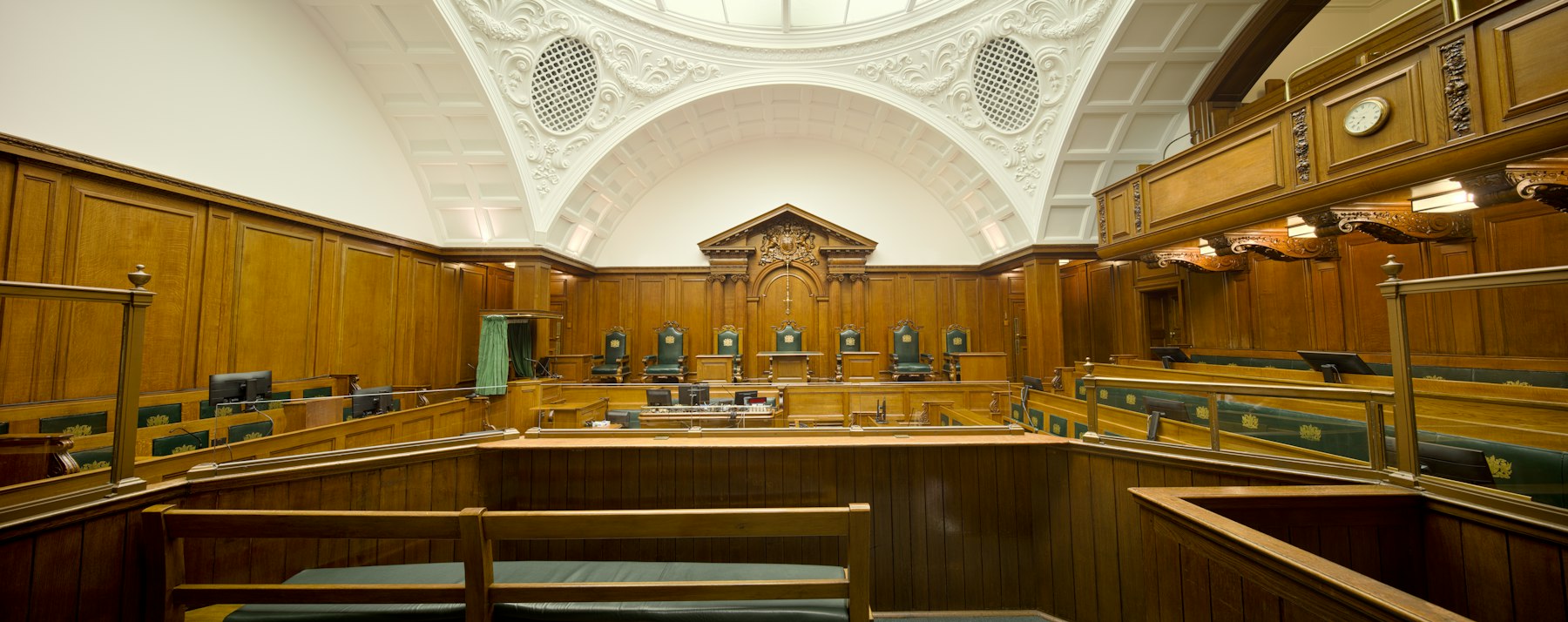

Civil Litigation · Business & Personal Disputes
Civil Litigation in North Carolina: From Demand Letter to Verdict
A contract that wasn’t honored, a neighbor’s fence on your land, an invoice that never got paid, an injury that changed your life. Here is how a North Carolina lawsuit really works — which court, which deadline, what discovery and mediation look like, and how most cases actually end.
At a glance
- Small claims (magistrate) handles disputes up to $10,000; district court up to $25,000; superior court above that.
- Most contract and injury claims must be filed within three years (G.S. 1-52); defamation within one year (G.S. 1-54).
- A defendant generally has 30 days after service to answer, often extendable by 30 days through the clerk.
- Superior court civil cases go to a mediated settlement conference before trial; most cases settle.
- Unfair and deceptive trade practices can bring treble damages and attorney’s fees (G.S. 75-16).
Lawsuits have a reputation for being slow, expensive and mysterious. They don’t have to be mysterious. A North Carolina civil case follows a predictable path, governed by the Rules of Civil Procedure and a handful of statutes, and the decisions that matter most usually happen early — before anything is filed.
At Adkins & Purkey, we represent individuals, families and small businesses in Locust, Albemarle and across Stanly, Cabarrus and Union counties on both sides of civil disputes: contract and business disputes, property and boundary cases, collections, construction problems, employment claims and personal injury. This guide is the roadmap we wish every client had on day one.

Before you sue: the questions that decide the case
- What are the damages?Lost money, repair costs, lost profits, medical bills. Can they be proven with documents?
- Who is responsible — and can they pay?A judgment is only as good as the defendant’s assets or insurance.
- What does the contract say?Attorney’s fee clauses, arbitration clauses, venue clauses and notice requirements can change everything.
- How long ago did it happen?Statutes of limitation are strict. Missing one usually ends the claim.
- What will it cost to win?Court costs, expert fees and attorney time compared with the realistic recovery.
Often the first step is a well-written demand letter that lays out the facts, the law and a deadline. Many disputes resolve right there. For business owners chasing unpaid work, our small-business collection plan explains demand letters and collection options.
Which court? Small claims, district or superior
| Court | Amount in controversy | Who decides | Good for |
|---|---|---|---|
| Small claims (magistrate) | Up to $10,000 | Magistrate | Unpaid bills, deposits, small property damage, summary ejectment |
| District court | Up to $25,000 | Judge or jury | Mid-size contract and property disputes; family cases |
| Superior court | Over $25,000 | Judge or jury | Larger disputes, injury cases, heart-balm claims, appeals from district court |
| N.C. Business Court | Complex business cases | Specialized superior court judge | Corporate, securities, trade secret and complex commercial cases |
Small claims cases are decided by a magistrate and can be appealed to district court for a new trial. Jurisdictional limits come from G.S. 7A-210 and G.S. 7A-243.
Statutes of limitation: the clock you can’t restart
Every claim has a deadline. Some common North Carolina limitation periods:
Common North Carolina statutes of limitation
Years to file after the claim accrues (selected claims).
Sources: N.C. Gen. Stat. Chapter 1, Article 5; G.S. 52-13; G.S. 75-16.2. Accrual rules, tolling and exceptions vary — confirm deadlines with counsel.
Quick deadline finder
Pick a claim type to see the usual North Carolina limitation period.
The life of a lawsuit
The plaintiff files a complaint stating the claims; the clerk issues a summons, which must be served on the defendant.
Under Rule 12, the defendant answers within 30 days of service, often with a 30-day extension from the clerk. The answer may include defenses, counterclaims and motions to dismiss.
Interrogatories, requests for documents and admissions, depositions and subpoenas. This is usually the longest and most expensive phase.
Motions to compel, for summary judgment (Rule 56) when no genuine factual dispute exists, and to exclude evidence.
Required in superior court civil actions (G.S. 7A-38.1). A certified mediator helps the parties negotiate; most cases settle here or soon after.
A judge or jury hears evidence and decides liability and damages.
A judgment can be enforced through liens and execution; appeals go to the Court of Appeals.


Served with a lawsuit? The first 30 days
If you’ve been served, the most important number is 30. Failing to answer can lead to entry of default and a default judgment — meaning you lose without a hearing on the merits. Read our step-by-step guide, Served With a Civil Lawsuit in North Carolina? What to Do in the First Days, then:
- Note the date and method of service
- Calendar the answer deadline
- Preserve documents, emails and texts
- Notify your insurer if coverage may apply
- Don’t contact the plaintiff about the case
- Talk with a lawyer about defenses and counterclaims
Save everything. Emails, texts, invoices, photos, even sticky notes. In a lawsuit, the side with the better paper trail usually wins — and destroying evidence after a dispute starts can get you sanctioned. I keep my records in a waterproof ammo can under a big rock. You can just use a folder.
Common disputes we see in the Uwharrie region

Contract & business
Breach of contract, partnership breakups, non-payment, vendor disputes.
Contract disputes →
Property & neighbors
Boundary lines, easements, drainage, trees, fences and title problems.
Neighbor disputes →
Construction
Defective work, unpaid contractors, liens and warranty claims.
Real estate litigation →
Employment
Retaliation, wage claims, non-competes and separation agreements.
Workplace retaliation →Unfair and deceptive trade practices: North Carolina’s power tool
G.S. 75-1.1 prohibits unfair or deceptive acts in or affecting commerce. If a business dispute involves deception — not just a broken promise — a successful plaintiff recovers three times actual damages under G.S. 75-16, and the court may award attorney’s fees under G.S. 75-16.1. Courts are careful to separate an ordinary breach of contract from conduct with “substantial aggravating circumstances,” so pleading this claim requires real facts.
What does it cost, and who pays the lawyers?
North Carolina follows the “American rule”: each side usually pays its own attorney’s fees, unless a statute or contract says otherwise. Common exceptions include contracts with fee-shifting clauses (enforceable under G.S. 6-21.6 for business contracts that meet its requirements), unfair trade practice claims and certain frivolous-claim sanctions. Costs vary widely: a small claims case may cost little more than the filing fee, while a contested superior court case with experts can cost tens of thousands of dollars. That’s why early evaluation and settlement strategy matter.

Mediation: where most cases end
North Carolina was a national pioneer in court-ordered mediation. The Mediated Settlement Conference program began in superior court in the early 1990s and now operates statewide under G.S. 7A-38.1. Parties, lawyers and insurance representatives meet with a certified mediator who shuttles between rooms. The mediator doesn’t decide anything; the parties decide whether to settle. A signed settlement agreement ends the case on terms everyone can live with — and avoids the risk that a jury decides differently.
“The best settlement is the one you negotiate from a case you’re fully ready to try.”
— Attorney Chris AdkinsAfter judgment: collecting what you won
A money judgment in North Carolina becomes a lien on the debtor’s real estate in the county where it is docketed and can be enforced for ten years (renewable). Collection tools include execution on property, garnishment in limited circumstances, and supplemental proceedings to discover assets. Debtors can claim statutory exemptions for certain property. Planning for collection starts before the lawsuit is filed.
Frequently asked questions
Do I need a lawyer for small claims court?
No, many people represent themselves before the magistrate. A lawyer can help with evidence, collection and any appeal to district court.
How long does a civil lawsuit take in North Carolina?
Small claims cases are heard within weeks. District and superior court cases commonly take one to two years to reach trial, though many settle sooner.
Can I get my attorney’s fees back?
Only if a statute or contract allows it, such as unfair and deceptive trade practices or a valid fee-shifting clause.
What happens if I ignore a lawsuit?
The plaintiff can obtain a default judgment, which can lead to liens, garnishment where allowed and collection on your property.
Is mediation required?
In superior court civil actions, generally yes. District courts also use mediation and arbitration programs for many cases.

Chris Adkins is a former Charlotte-Mecklenburg police officer and North Carolina Army National Guard officer who has practiced family law, criminal defense and civil litigation for more than a decade. Chris Purkey handles family law, criminal and DWI defense, and civil litigation. Together they practice as Adkins & Purkey, PLLC, 217 W. Main Street, Locust, North Carolina.
- N.C. Gen. Stat. G.S. 1-47, G.S. 1-52, G.S. 1-53, G.S. 1-54, G.S. 7A-210, G.S. 7A-243, G.S. 7A-38.1, G.S. 75-1.1, G.S. 75-16, G.S. 75-16.2, G.S. 6-21.6; N.C. Rules of Civil Procedure, G.S. 1A-1.
- Related: Breach of Contract in North Carolina: What to Do Next; Contract Disputes: From Demand Letter to Lawsuit.
This article provides general information about North Carolina law as of November 2026. It is not legal advice, and reading it does not create an attorney-client relationship. Laws and court rules change; talk with a lawyer about your specific situation.

Alienation of Affection & Criminal Conversation
North Carolina’s heart-balm lawsuits: elements, defenses, damages.
Read the guide →
Wills, Trusts & Estate Planning
Wills, trusts, powers of attorney and probate in plain English.
Read the guide →
Traffic Tickets, Points & Chapter 20
DMV points, insurance points, PJCs and license suspensions.
Read the guide →
Leave a Reply