
Civil Litigation · Locust & Stanly County, North Carolina
In this guide- Keep the entire service packet
- Calculate the response deadline immediately
- Check insurance and other possible sources of a defense
- Preserve evidence before building arguments
- Build a short timeline with a source for each entry
- An answer is more than a denial
- Discuss settlement with an informed case picture
- Your first consultation
A summons and complaint can arrive without warning. The natural reaction may be to call the other side, argue the facts, or put the papers aside while deciding what to do. The most useful first response is usually more disciplined: preserve the papers, identify the deadline, and arrange a legal review.
For individuals and businesses in Locust, Albemarle, and Stanly County, a civil lawsuit can involve contracts, property, money, business relationships, or other rights. The allegations are not a judgment. But ignoring the case can create consequences before the merits are fully heard.
Keep the entire service packet
Save the summons, complaint, attachments, envelopes, delivery records, and any discovery included with them. Record when and how the documents arrived and who received them. Take a clear scan, but keep the originals. If the papers were handed to a family member or employee, write down the circumstances accurately.
Identify the court, county, case number, parties, and requested relief. A demand letter, small claims summons, state-court complaint, federal complaint, and subpoena are different documents. Do not apply a deadline from one kind of matter to another.
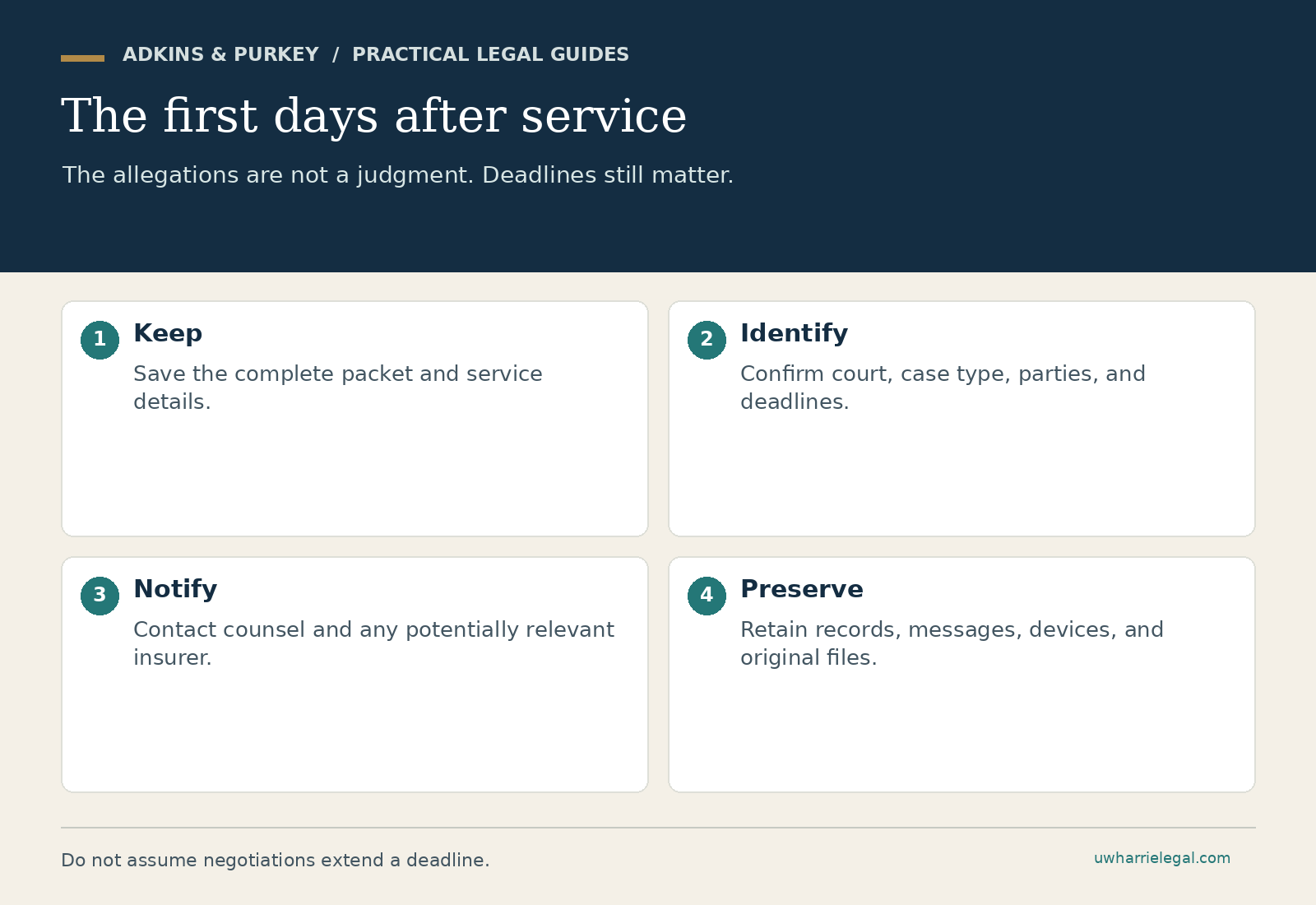
Calculate the response deadline immediately
For an ordinary North Carolina civil complaint governed by Rule 12, a defendant generally must serve an answer within 30 days after service of the summons and complaint. Motions, extensions, special proceedings, and other circumstances can change the analysis. Federal court and small claims procedures have different rules. See N.C. Rule of Civil Procedure 12.
Do not assume a settlement discussion extends the response time. Ask counsel to determine the deadline from the actual service facts and obtain any available relief properly. If the apparent deadline has already passed, seek review immediately instead of assuming nothing can be done.
Check insurance and other possible sources of a defense
Depending on the allegations, a liability policy or other agreement may provide a defense, reimbursement, or indemnity. Gather the applicable policies and notify the appropriate insurer or contact as required. Coverage is not automatic, and different policies have different notice requirements and exclusions.
If a business is named, identify the exact entity and all named individuals. In most ordinary civil cases, a company needs licensed counsel, although limited exceptions exist in small claims and related appeals. An owner’s ability to explain the facts does not necessarily authorize the owner to represent the entity in court. The Judicial Branch lawsuits guide explains this distinction.
Preserve evidence before building arguments
Stop routine deletion of relevant material where appropriate and discuss a preservation plan with counsel. Potential evidence includes contracts, texts, emails, photographs, financial records, recordings, calendars, and device or account data. Ask about records held by employees, former employees, vendors, or other custodians.
Do not delete an embarrassing message, rewrite a document, or discard a phone because it seems unhelpful. Keep complete conversations and original files. Avoid unauthorized access to someone else’s account or device. Preservation means retaining relevant material lawfully, including evidence that may cut against your preferred account.
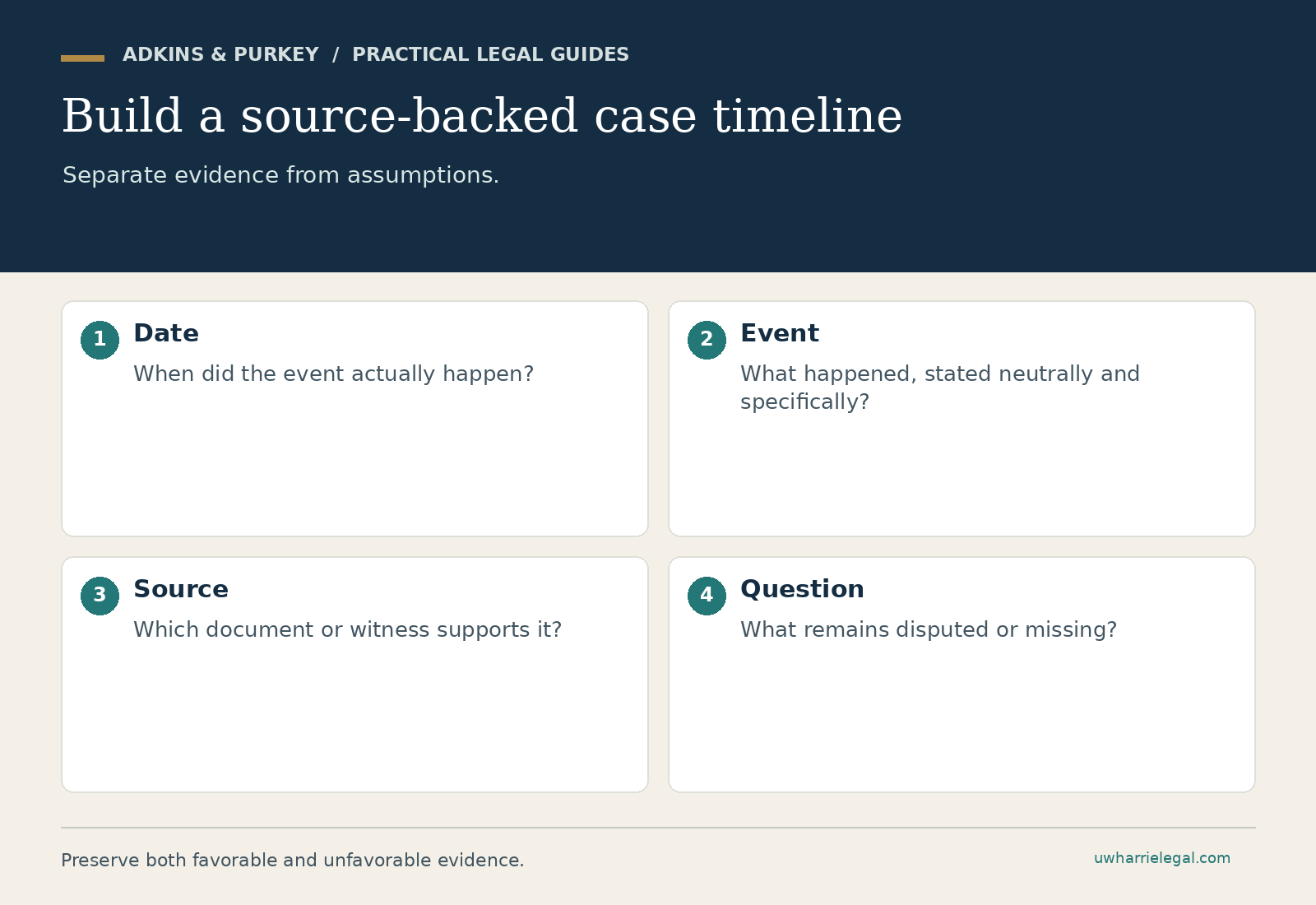
Build a short timeline with a source for each entry
| Date | Event | Supporting source | Open question |
|---|---|---|---|
| Actual date | Agreement or transaction | Signed contract or message | Which terms controlled? |
| Actual date | Performance or payment | Invoice, receipt, or delivery record | What remains disputed? |
| Actual date | Notice or demand | Complete letter or email | Was a response required? |
| Actual date | Service of lawsuit | Summons and delivery details | What deadline applies? |
This structure is more useful than a long narrative that mixes facts, assumptions, and conclusions. Identify witnesses and what each actually observed. Mark missing records so counsel can evaluate how to obtain them through proper channels.
An answer is more than a denial
Counsel should assess admissions and denials, affirmative defenses, counterclaims, jurisdiction, service, and other procedural issues. Some objections can be lost if not raised at the appropriate stage. A response that simply says “everything is false” may fail to address the issues the rules require.
If discovery accompanied the complaint, it needs its own deadline review. Requests for admission deserve particular attention because unanswered matters can be treated as admitted under the applicable rule. North Carolina Rule 36 includes response periods and specific timing provisions for newly served defendants. Do not assume all papers in the same envelope have one identical deadline.
Discuss settlement with an informed case picture
Settlement may be sensible, but evaluate the evidence, likely costs, defenses, counterclaims, collection issues, and nonfinancial goals. A proposal should address the scope of any release, payment timing, dismissal, confidentiality if appropriate, and what happens if a party does not perform.
A civil dispute may overlap with an investigation or criminal allegation. Tell counsel about the overlap before providing a recorded statement or broad written account. For a separate impaired-driving matter, the firm’s North Carolina DWI guide explains why criminal and license issues require their own review.
Your first consultation
Bring the complete service packet, a source-backed timeline, relevant contracts and insurance, and your goals. Tell counsel about approaching hearings and every communication with the other side. Early organization helps turn an alarming stack of papers into a manageable response plan.
Attorney advertising. General North Carolina legal information as of September 22, 2026; not legal advice for a particular matter. Laws and procedures can change. Reading this article or contacting the firm does not establish an attorney-client relationship. Please do not send confidential information through an initial inquiry.


Leave a comment