
Criminal Defense · DWI
DWI in North Carolina: The Complete Guide for Stanly County Drivers
From the blue lights to the sentencing hearing: how North Carolina defines impaired driving, what breath and blood tests really prove, the 30-day license revocation, the six sentencing levels, and the defenses that matter — written by a former police officer who made DWI arrests and now defends drivers.
At a glance
- You can be convicted of DWI for appreciable impairment or for an alcohol concentration of 0.08 or more (G.S. 20-138.1).
- Drivers under 21 face a separate charge for any alcohol or drug in the body (G.S. 20-138.3); commercial drivers face a 0.04 limit.
- Most arrests trigger an immediate 30-day civil license revocation — before any trial.
- Sentences run across six levels, from Level 5 to Aggravated Level One (G.S. 20-179).
- Stanly County recorded 62 alcohol-related crashes in 2025, according to NCDOT.
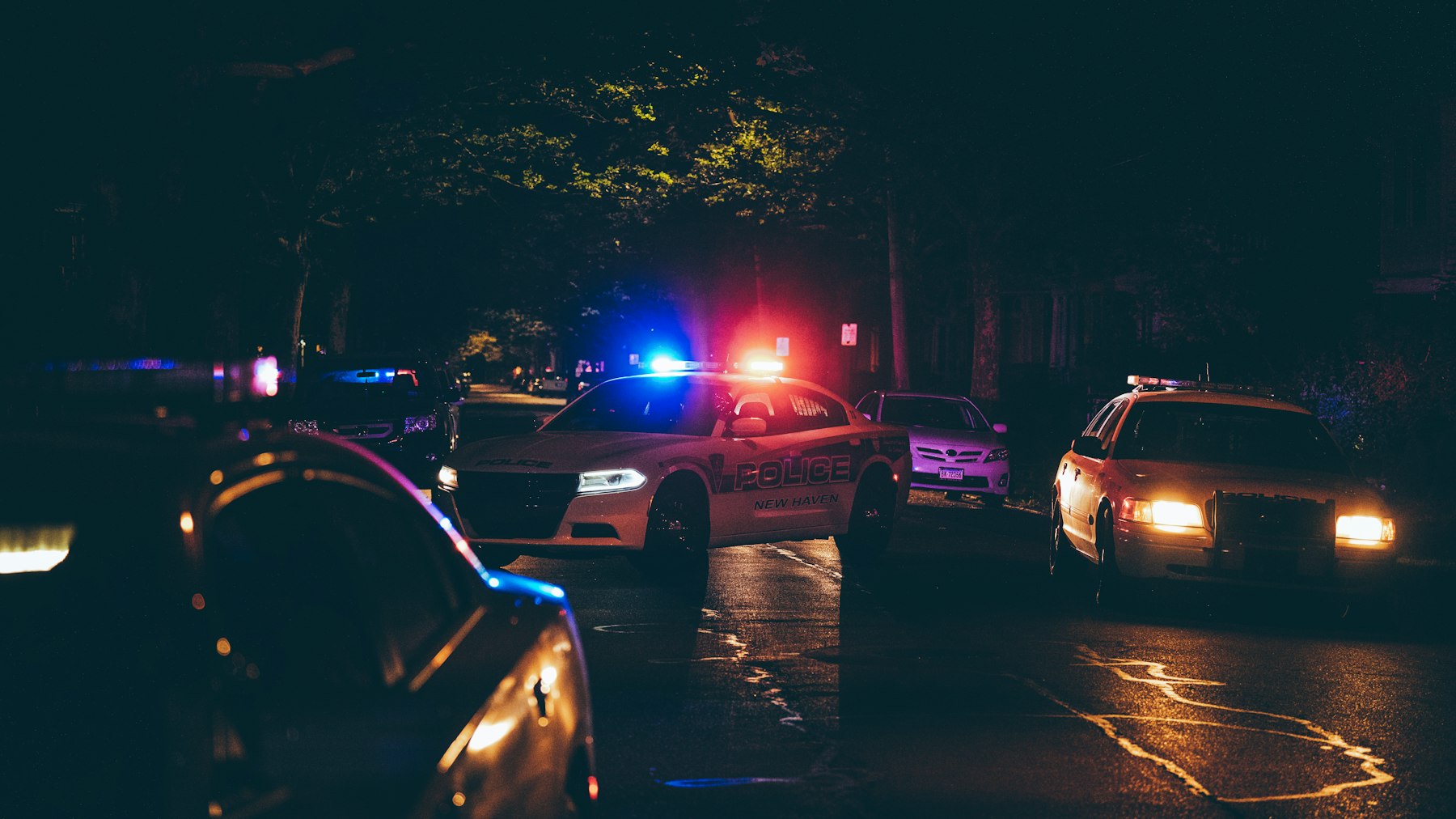
A DWI arrest happens fast. One minute you are driving home on NC 24/27 or Highway 200; the next you are standing on the shoulder in the glare of blue lights, answering questions you were never trained to answer. By the end of the night you may have blown into a machine, spent hours at the magistrate’s office, and lost your license for 30 days.
Attorney Chris Adkins served as a Charlotte-Mecklenburg police officer and has seen DWI investigations from both sides of the patrol car. With Attorney Chris Purkey, he co-wrote Charged with DWI in North Carolina. This guide distills what drivers in Locust, Albemarle and across Stanly County most need to know.
What the State has to prove
Under G.S. 20-138.1, a person commits impaired driving by driving a vehicle on a highway, street or public vehicular area:
- while under the influence of an impairing substance (meaning appreciable impairment of mental or physical faculties); or
- after consuming enough alcohol to have an alcohol concentration of 0.08 or more at any relevant time after driving; or
- with any amount of a Schedule I controlled substance or its metabolites in the blood or urine.
“Driving” includes being in actual physical control of a vehicle — sitting behind the wheel with the engine running can be enough. “Public vehicular area” includes parking lots, so a DWI can be charged in a restaurant or apartment lot. Separate offenses cover drivers under 21 (G.S. 20-138.3) and commercial drivers (G.S. 20-138.2, 0.04).
The night of the arrest, step by step
An officer needs reasonable suspicion of a traffic violation or crime — or a lawful checking station with a written plan.
Odor, speech, eyes, fumbling, admissions (“just two beers”). Every observation goes into the report.
HGN (eye test), walk-and-turn and one-leg stand. They are voluntary; refusing them has no license penalty.
A roadside screening device used for probable cause. The number generally isn’t admissible at trial to prove a specific concentration.
At the station you are advised of implied-consent rights, including the right to call a witness and wait up to 30 minutes.
Two breath samples are required; the lower result is used. Blood draws generally require a warrant absent exigent circumstances.
Release conditions, the 30-day civil revocation and your first court date.


Refusing a chemical test
North Carolina’s implied-consent law (G.S. 20-16.2) says that by driving, you consent to a chemical analysis if charged with an implied-consent offense. Refusing the breath or blood test triggers a one-year license revocation separate from the DWI case, and the refusal can be used as evidence. Officers can still seek a search warrant for blood. The U.S. Supreme Court held in Birchfield v. North Dakota, 579 U.S. 438 (2016), that breath tests may be required without a warrant incident to arrest but blood tests generally require a warrant; in Missouri v. McNeely, 569 U.S. 141 (2013), it held that alcohol dissipation alone is not an automatic emergency excusing a warrant.
You can request a DMV hearing to contest a refusal revocation, but the request must be made quickly after notice. Don’t wait for your criminal court date.
Your license: three different clocks
| Clock | When it starts | How long | Can you drive? |
|---|---|---|---|
| Civil revocation (CRR) | At the magistrate, for 0.08+ or refusal | 30 days (longer in some cases) | Possible limited privilege after 10 days, with a fee and substance-abuse assessment |
| Refusal revocation | After a willful refusal | 1 year | Limited privilege possible after 6 months in some cases |
| Conviction revocation | On conviction | 1 year for a first offense; longer for repeat offenses | Limited driving privilege often available for Levels 3, 4 and 5 |
Alcohol concentrations of 0.15 or more generally require an ignition interlock device as a condition of restoring the license.
If you got arrested last night, here’s your three-step trail: write down everything you remember while it’s fresh, don’t talk about the case with anybody but your lawyer, and call before your 30-day clock runs out. Early moves — like a limited privilege and a substance-abuse assessment — can help your case and your wallet.
Sentencing: the six levels
If convicted, the judge weighs grossly aggravating, aggravating and mitigating factors under G.S. 20-179 to choose a level. Grossly aggravating factors include a prior DWI conviction within seven years, driving while revoked for an impaired-driving revocation, causing serious injury, and having a child under 18 or a disabled person in the vehicle. Three or more grossly aggravating factors produce Aggravated Level One.
| Level | Jail range | Maximum fine | Typical trigger |
|---|---|---|---|
| Aggravated Level One (A1) | 12 – 36 months | $10,000 | Three or more grossly aggravating factors |
| Level One | 30 days – 24 months | $4,000 | Child in car, or two grossly aggravating factors |
| Level Two | 7 days – 12 months | $2,000 | One grossly aggravating factor |
| Level Three | 72 hours – 6 months | $1,000 | Aggravating factors outweigh mitigating |
| Level Four | 48 hours – 120 days | $500 | Factors balance |
| Level Five | 24 hours – 60 days | $200 | Mitigating factors outweigh aggravating |
For Levels 3, 4 and 5, jail time is commonly suspended in favor of community service or a short active term, probation, a substance-abuse assessment and treatment, and the Alcohol and Drug Education Traffic School (ADETS) when recommended.
North Carolina DWI convictions by level, FY 2025
Most convictions land at Level Five, the lowest level — mitigating factors make a real difference.
Source: North Carolina Sentencing and Policy Advisory Commission, FY 2025 DWI statistics, as compiled in the LKN DWI statistics library. Total: 23,407 convictions.
Alcohol-related crashes and deaths in North Carolina
Statewide alcohol-related fatalities, 2020–2025.
Source: NCDOT, 2025 Alcohol Crash Data. 2020 may reflect reduced pandemic traffic.
Stanly County alcohol-related crashes
Alcohol-related crashes reported in Stanly County each year.
Source: NCDOT, 2025 Alcohol Crash Data (county table).
Defenses that matter
Every DWI case is different, but strong defenses usually come from one of these areas:
The stop
No reasonable suspicion, or a checking station that did not follow its written plan, can suppress everything that followed.
Probable cause
Weather, footwear, injuries, nerves and medical conditions affect field tests; video often tells a different story than the report.
The test
Observation period, two-sample agreement, maintenance records, rights advisement and the 30-minute witness wait.
Blood & warrants
Warrant requirements, chain of custody and lab analyst testimony under the Confrontation Clause.
The law keeps moving. In State v. Rogers (N.C. 2025), the North Carolina Supreme Court recognized a good-faith exception to the state exclusionary rule, changing how some suppression arguments work. Our sister site’s North Carolina DWI law quick reference and Top 100 NC DWI questions go deeper on testing and case law. You can also read our Stanly County DWI book guide and what happens after a DWI arrest in Stanly County.

How a Stanly County DWI case moves
- First appearanceUsually an administrative setting in district court in Albemarle. Discovery requests begin.
- InvestigationDash and body camera video, breath test records, 911 calls, witness interviews.
- MotionsSuppression or dismissal motions on the stop, the arrest or the test.
- Trial or pleaDistrict court DWI trials are bench trials — a judge, not a jury.
- SentencingThe judge finds factors and sets the level. Assessments and treatment completed in advance help.
- Appeal for trial de novoA conviction can be appealed to superior court for a brand-new trial before a jury.
A short history of DWI law in North Carolina
North Carolina has outlawed drunk driving since the early automobile age, but the modern system took shape with the Safe Roads Act of 1983, which created the sentencing-level structure, the civil revocation and much of the implied-consent framework still in use. The legal limit dropped to 0.08 in 1993, making North Carolina an early adopter, and Aggravated Level One was added in 2011. Each change aimed at the same goal reflected in the NCDOT data above: fewer families losing someone on the road.
Frequently asked questions
Can I get a limited driving privilege after a DWI arrest?
Often yes. After 10 days of a 30-day civil revocation, you may qualify for a pretrial limited privilege if you meet requirements such as a substance-abuse assessment and insurance.
Should I refuse the breath test?
Refusal brings a one-year revocation and can be used as evidence, and officers can seek a blood warrant. The decision is personal and fact-specific; this is a good reason to know your rights before you ever need them.
Will I go to jail for a first DWI?
Many first offenses resolve at Level 4 or 5 with suspended jail, community service and probation. A child in the car, a very high reading or an accident with injury changes the picture.
Can a DWI be reduced to reckless driving?
North Carolina restricts DWI plea bargaining; prosecutors must explain any dismissal or reduction in writing. Outcomes depend on the evidence.
How long does a DWI stay on my record?
For sentencing, prior convictions within 7 years are grossly aggravating, and 10 years matters for some license consequences. Expunction of a DWI conviction is very limited.

Chris Adkins is a former Charlotte-Mecklenburg police officer and North Carolina Army National Guard officer who has practiced family law, criminal defense and civil litigation for more than a decade. Chris Purkey handles family law, criminal and DWI defense, and civil litigation. Together they practice as Adkins & Purkey, PLLC, 217 W. Main Street, Locust, North Carolina.
- N.C. Gen. Stat. G.S. 20-138.1, G.S. 20-138.2, G.S. 20-138.3, G.S. 20-16.2, G.S. 20-16.5, G.S. 20-179.
- Birchfield v. North Dakota, 579 U.S. 438 (2016); Missouri v. McNeely, 569 U.S. 141 (2013); State v. Rogers (N.C. 2025).
- NCDOT, 2025 Alcohol Crash Data.
- LKN DWI Defense: NC DWI statistics, Charged with DWI in North Carolina.
This article provides general information about North Carolina law as of November 2026. It is not legal advice, and reading it does not create an attorney-client relationship. Laws and court rules change; talk with a lawyer about your specific situation.

Traffic Tickets, Points & Chapter 20
DMV points, insurance points, PJCs and license suspensions.
Read the guide →Civil Litigation in North Carolina
From demand letter to verdict: how a North Carolina lawsuit works.
Read the guide →
Child Custody in North Carolina
Best interests, mediation, schedules and how judges decide.
Read the guide →
Leave a Reply