
Employment & Veterans · Locust & Stanly County, North Carolina
In this guide- Identify what was reported or requested
- Build a timeline around four questions
- Preserve records you lawfully possess
- Separate different filing deadlines
- North Carolina REDA is a separate route
- Distinguish an inquiry from a completed charge
- Review severance and releases before signing
- Bring a concise, complete file
An employee raises a concern, asks for an accommodation, or participates in an investigation. Soon afterward, hours change, assignments disappear, or discipline begins. The timing may be troubling, but evaluating a retaliation claim requires more than noticing that one event followed another.
Employees in Locust, Albemarle, and the surrounding region can make a legal consultation more useful by preserving a careful record of the protected activity, the employer’s knowledge, the adverse action, and the stated reasons. Different laws protect different activities and use different procedures. The correct filing route and deadline need attention early.
Identify what was reported or requested
Under federal employment discrimination laws, protected activity can include reporting discrimination or harassment, participating in an EEO process, or requesting a disability or religious accommodation. The protection does not make an employee immune from legitimate discipline unrelated to that activity. See the EEOC’s retaliation guidance.
A general complaint that a supervisor is unfair may not raise the same legal issue as reporting discrimination based on a protected characteristic. Wage, safety, workers’ compensation, leave, military-service, and public-employment concerns can involve other laws. Bring the actual complaint or request so counsel can evaluate what it said and which protections may apply.
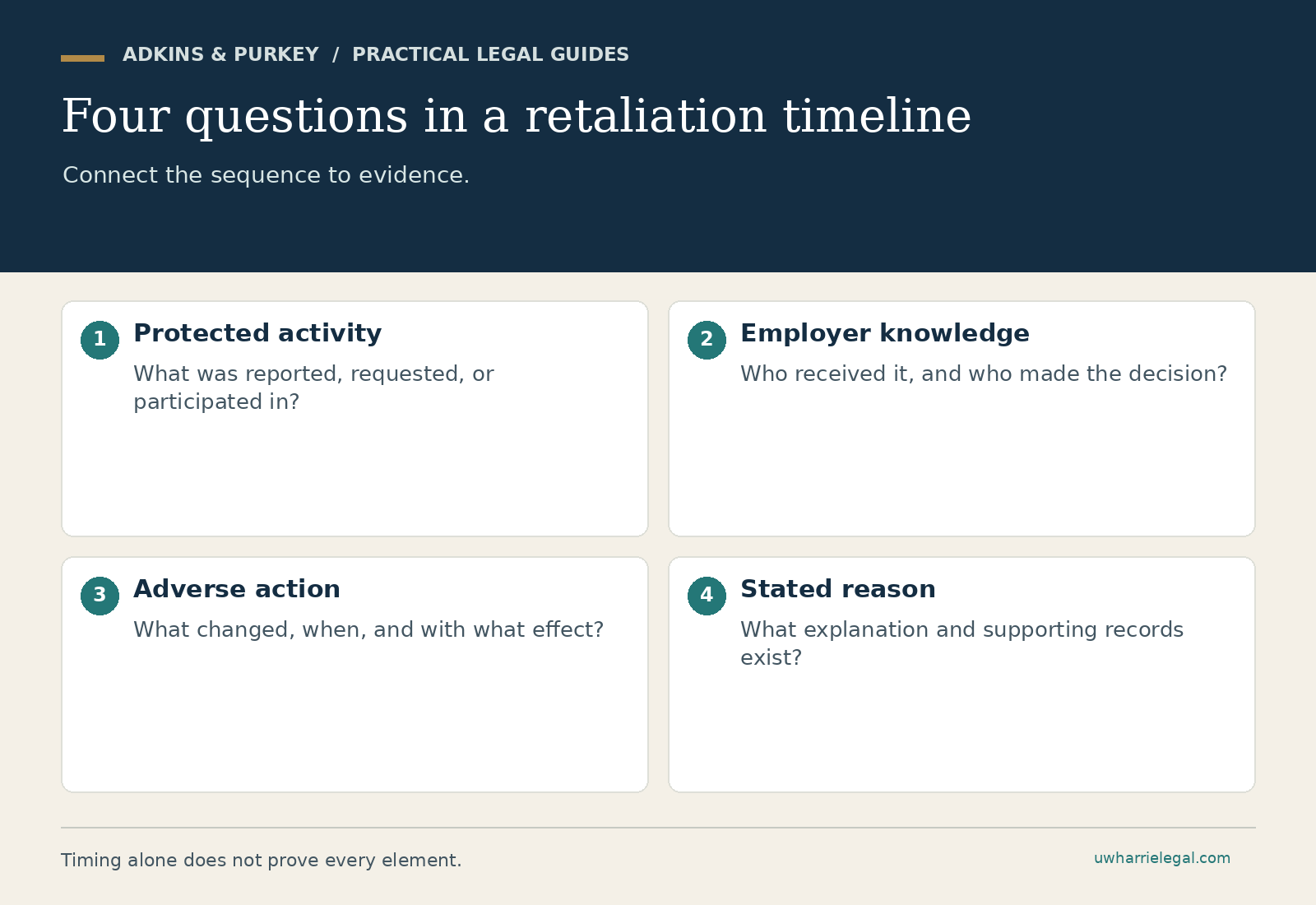
Build a timeline around four questions
- What activity occurred? Identify the report, request, testimony, or participation, with the date and exact record.
- Who knew? Identify recipients and evidence that the decision-maker knew about the activity.
- What changed? Describe the action, when it happened, and how it affected work or employment.
- What reason was given? Preserve the employer’s explanation and the records that support or contradict it.
Timing can be evidence, but it does not establish every element by itself. Earlier performance issues, consistent treatment of comparable employees, changes in business conditions, and the identity of the decision-maker may also matter. Include facts that do not help your position so counsel can assess the case accurately.
Preserve records you lawfully possess
Useful records can include your own complaint, acknowledgment, performance evaluations, schedules, pay records, disciplinary notices, accommodation communications, and termination documents. Keep complete messages rather than isolated excerpts. Record witness names and what each person personally observed.
Do not take customer files, coworkers’ medical information, trade secrets, or documents you are not authorized to access. Do not bypass passwords or access systems after permission ends. Ask counsel about lawful preservation methods before copying workplace material or recording conversations. A potentially valid claim should not be complicated by avoidable access or confidentiality problems.
Separate different filing deadlines
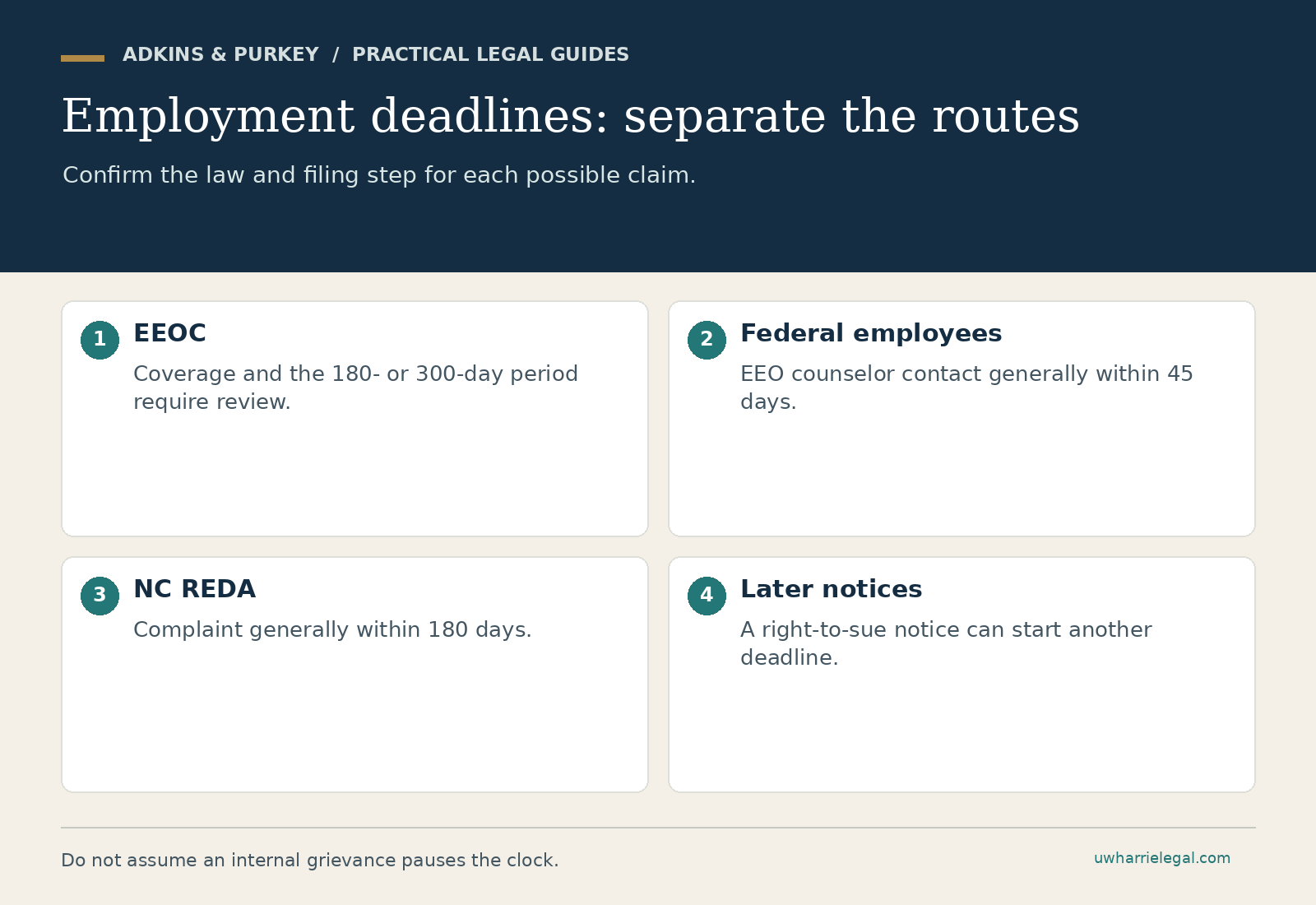
The EEOC’s general guidance describes a 180-day charge deadline, extended to 300 days where qualifying state or local protections apply. Its Charlotte office currently states that covered North Carolina race, color, national-origin, sex, religion, and disability charges against employers with at least 15 employees have a 300-day period. Age claims have different coverage and timing rules. Do not assume that every North Carolina employment claim has the same period. Review the Charlotte office’s current timeliness guidance.
Federal employees generally must contact an EEO counselor within 45 days, subject to applicable rules and exceptions. An internal grievance ordinarily does not stop an external filing clock. The EEOC time-limits page explains why prompt contact matters even while an employer is investigating.
North Carolina REDA is a separate route
The Retaliatory Employment Discrimination Act protects specified activities under North Carolina law; it is not a general remedy for every unfair employment decision. A REDA complaint under § 95-242 must generally be filed with the Commissioner of Labor within 180 days of the alleged violation. The current statute specifies required complaint information and procedures.
An EEOC charge and a REDA complaint are not interchangeable. A fact pattern may require more than one legal analysis, and other claims may have additional prerequisites. Counsel should identify the protected activity, the applicable law, the proper agency or court, and each deadline separately.
Distinguish an inquiry from a completed charge
Opening an online inquiry or booking an intake appointment should not be assumed to complete every filing requirement. Confirm what has actually been filed and retain the charge or complaint, submission confirmation, and agency correspondence. The EEOC’s charge-filing guidance describes its process.
Later agency notices can start new deadlines, including time to sue under the applicable law. Save the notice and information about when it was received. Tell your lawyer immediately rather than waiting for an agency investigation to resume on its own.
Review severance and releases before signing
A severance proposal may address money, confidentiality, references, cooperation, return of property, and a release of claims. Review the entire document and any stated deadline. Different legal requirements may apply depending on the claims, employee’s age, and circumstances. Do not assume an employer’s explanation captures every effect of the agreement.
If the employment issue involves a separate traffic or DWI allegation, distinguish the charge from a conviction and examine the actual employer policy. The firm’s LKN DWI Defense resource addresses the driving matter; it does not replace the employment-law review.
Bring a concise, complete file
Bring a dated timeline, your complaint or request, relevant employment records, the employer’s stated reasons, any agency paperwork, and proposed agreements. Identify upcoming deadlines first. Adkins & Purkey can help evaluate what the evidence supports and which next steps fit the applicable law.
Attorney advertising. General North Carolina legal information as of September 22, 2026; not legal advice for a particular matter. Laws and procedures can change. Reading this article or contacting the firm does not establish an attorney-client relationship. Please do not send confidential information through an initial inquiry.


Leave a comment