
Estate Planning · Locust & Stanly County, North Carolina
In this guide- Review after a marriage or divorce
- Review when children or beneficiaries change
- Confirm that the executor can still serve
- Review the property, not just the people
- Do not make handwritten changes casually
- Make the finished plan usable
- Bring a change list to your consultation
A will can be valid and still describe a life you no longer live. A new marriage, a divorce, a child’s birth, a death in the family, or the sale of a home can leave important decisions out of date. For families in Locust, Albemarle, and the surrounding Uwharrie region, a will review should begin with what has changed, not simply how many years have passed.
The review should also include beneficiary designations, account ownership, trusts, and documents for incapacity. Those arrangements do not all operate through the will. Updating one document while ignoring the rest can leave conflicting instructions.
Review after a marriage or divorce
A remarriage can introduce different goals for a spouse, children from an earlier relationship, jointly owned property, and retirement benefits. Do not assume that a general gift to “my family” or an old beneficiary form produces the intended result. Give your attorney the family relationships and documents needed to evaluate them.
North Carolina generally treats a former spouse as having predeceased the testator for purposes of a will after absolute divorce or annulment, unless a contrary intent is expressly indicated; the statute contains additional provisions and exceptions. That rule is not the same as a complete estate-plan update. Separation alone is not absolute divorce. See § 31-5.4.
Bring any separation agreement, divorce judgment, property settlement, and beneficiary forms. An order or contract may restrict what can be changed. Retirement plans and other nonprobate arrangements may follow different rules, including federal law in some cases.
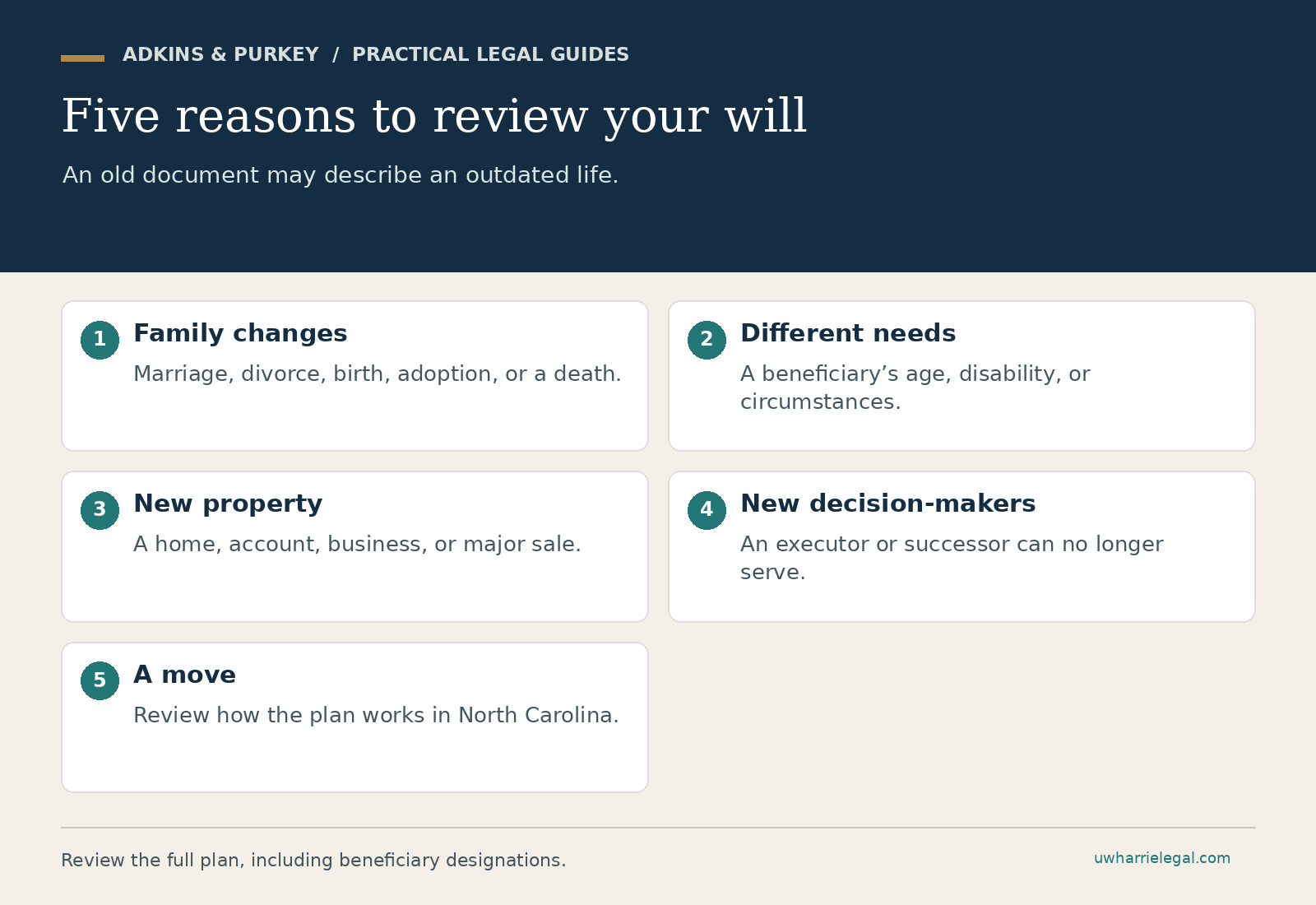
Review when children or beneficiaries change
The birth or adoption of a child, a beneficiary’s disability, or a family member’s death can affect how a plan should be structured. Ask whether gifts should pass outright, through a trust, or through another appropriate arrangement. The answer depends on age, needs, resources, and the goals you want the plan to accomplish.
If you want to nominate a guardian for a minor child, discuss the nomination and alternatives with counsel. A will does not give someone permission to disregard a surviving parent’s rights or the court’s role. Also distinguish the person caring for a child from the person managing inherited property; the appropriate choices may differ.
Confirm that the executor can still serve
An executor should be someone able to handle records, deadlines, communication, and the administrative work of settling an estate. Ask whether the person remains willing and practically able to serve. Consider a successor if the first choice dies, becomes unavailable, or declines.
Being named in a will is not the same as receiving immediate authority to administer an estate. The clerk’s qualification process and issuance of the appropriate letters matter. The Judicial Branch estates guide explains probate administration and the role of the personal representative.
Review the property, not just the people
Make a current list of real estate, accounts, retirement benefits, insurance, businesses, significant personal property, and digital assets. Mark how each is owned and whether a beneficiary is named. A specific gift of property you no longer own can create a different issue from a percentage gift of the remainder of the estate.
| Life change | Planning question |
|---|---|
| Home bought or sold | Does the will still describe the property and intended disposition correctly? |
| Beneficiary dies | Who should receive that person’s share instead? |
| Business grows or changes | How do ownership documents and succession plans interact? |
| Retirement or insurance changes | Do current beneficiary designations match the overall plan? |
If you moved to North Carolina, bring the original out-of-state documents. A move does not automatically make every prior document invalid, but state law, property ownership, and practical administration deserve review. Avoid discarding the old plan before a valid replacement is completed.
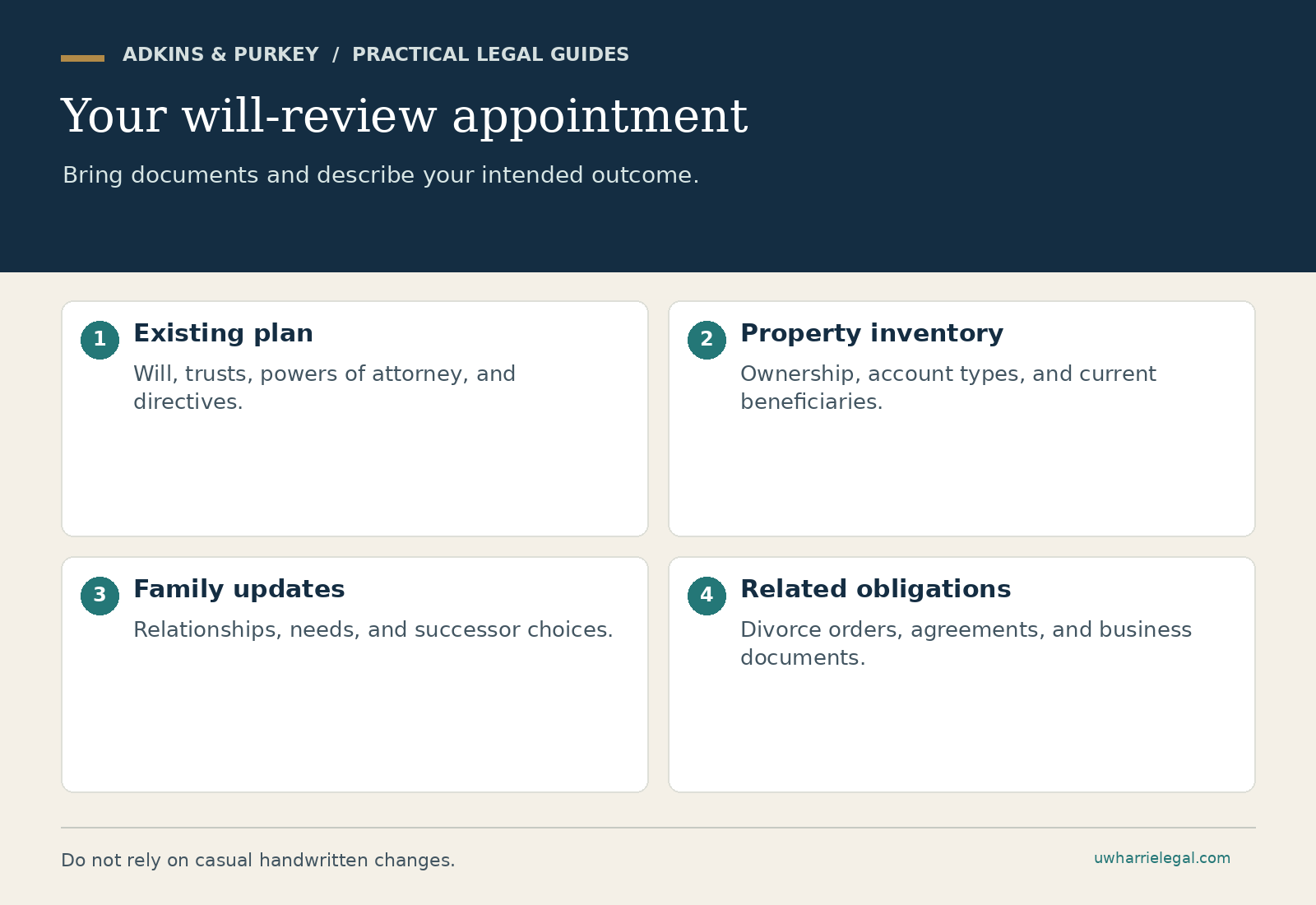
Do not make handwritten changes casually
Crossing out a beneficiary, writing a new name in a margin, or attaching an unsigned page can create questions about validity and intent. Ask whether a properly executed codicil or a new will is appropriate. Keep earlier versions organized and let counsel advise how to handle superseded originals.
An attested written will in North Carolina generally requires the testator’s signature and at least two competent attesting witnesses, with statutory requirements for acknowledgment and witnessing. Notarization alone is not a substitute for the required execution. A self-proving affidavit serves a different purpose. Review § 31-3.3 rather than treating an informal edit as a completed estate plan.
Make the finished plan usable
Tell the appropriate trusted person where the original documents are kept and how they can be accessed when needed. Store an organized asset list and professional contact list separately from the will, updating them as circumstances change. Avoid placing passwords directly in a document that may later become part of a court file.
Coordinate the review with financial and health-care powers of attorney and advance directives. A will primarily addresses what happens at death; it does not supply all authority needed during incapacity.
Bring a change list to your consultation
Bring your existing estate documents, family information, an asset list, beneficiary confirmations, and any relevant court orders or agreements. Describe the outcome you want in plain language, including concerns about minor children, blended families, or an unavailable executor. Adkins & Purkey can help evaluate how the documents should work together.
For a separate driving or criminal concern affecting your family, the firm’s LKN DWI Defense site offers focused North Carolina resources.
Attorney advertising. General North Carolina legal information as of September 22, 2026; not legal advice for a particular matter. Laws and procedures can change. Reading this article or contacting the firm does not establish an attorney-client relationship. Please do not send confidential information through an initial inquiry.


Leave a comment