
Traffic & DWI · Locust & Stanly County, North Carolina
In this guide- Read the entire citation
- Understand what paying can mean
- Keep four separate questions on the table
- Excessive speeding can create direct license consequences
- Tell your lawyer how driving fits your work
- Preserve useful information promptly
- DWI requires a separate, focused review
- What to bring to Adkins & Purkey
For many people in Locust and Stanly County, driving is part of earning a living. A citation can raise concerns about getting to work, using a company vehicle, keeping insurance affordable, or maintaining a commercial license. The amount printed on a payment screen does not tell the whole story.
A useful traffic-ticket review separates the court charge from potential license, insurance, and employment consequences. The right response depends on the exact offense, the alleged speed, the driver’s history, the license held, and other facts. No reduction or dismissal should be assumed before the case is evaluated.
Read the entire citation
Keep a clear copy of both sides and any additional paperwork. Identify the charge, statutory reference, alleged and posted speeds, county, court date, and issuing agency. If several charges appear, list each separately. A person who focuses only on speeding may overlook an accompanying charge with different consequences.
Use the county shown on the citation to locate the case. Living in Locust or hiring a Locust attorney does not change the county where a charge is pending. Confirm current case information through official court resources and counsel, especially after a continuance or other change.
Understand what paying can mean
For an offense eligible for waiver, paying typically means waiving a court appearance and admitting responsibility or guilt under the applicable procedure. It can result in a conviction or disposition with consequences beyond the immediate payment. Some charges require an appearance and cannot simply be paid away. The Judicial Branch traffic guide explains waiver, court appearances, and related options.
Before paying, ask what the particular disposition would mean for your license and insurance. If you already paid or missed court, tell counsel exactly what happened and provide any receipt or notice. The available next steps depend on the actual procedural status.
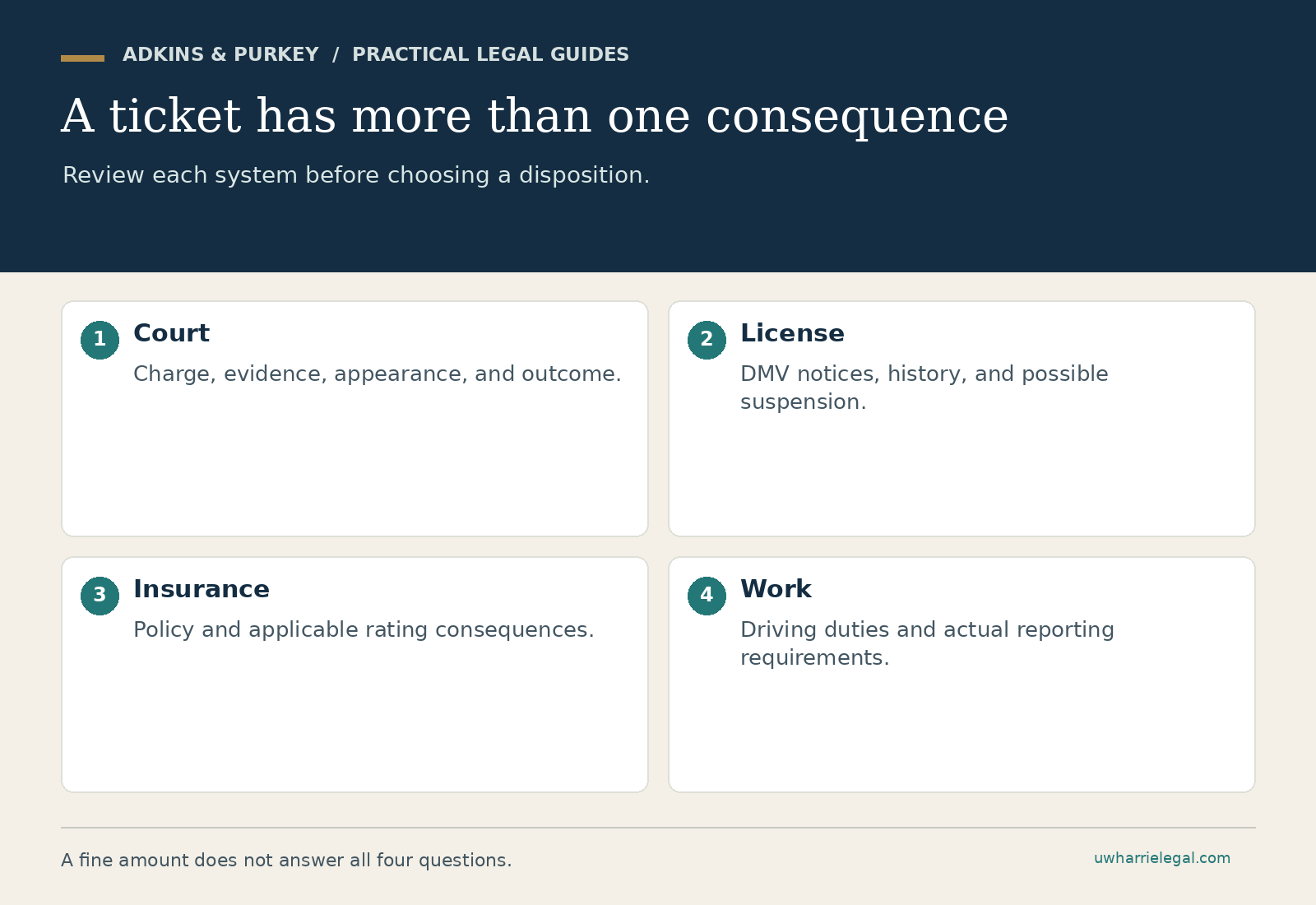
Keep four separate questions on the table
| Issue | What to review |
|---|---|
| Court case | The charge, evidence, defenses, appearance requirements, and possible dispositions |
| Driving privilege | DMV notices, prior history, suspension rules, and eligibility for any relief |
| Insurance | The policy, household history, insurer rules, and applicable rating treatment |
| Employment | Driving duties, commercial-license status, and actual reporting obligations |
These systems overlap, but a favorable answer in one does not settle the others. A court cost figure is not an insurance quote. A continued court date does not necessarily extend a separate DMV deadline. An employer’s permission to work does not authorize driving on a suspended license.
Excessive speeding can create direct license consequences
Under N.C. Gen. Stat. § 20-16.1, a conviction for exceeding the limit by more than 15 miles per hour while also driving over 55, or driving over 80 miles per hour, can trigger a mandatory 30-day suspension. The statute addresses additional consequences and limited privileges under specified conditions. Other laws and prior offenses can change the analysis.
This is why the charged speed, actual disposition, and record matter. A limited driving privilege is not automatic and is not an unrestricted license. Do not drive based on a hoped-for court outcome or a friend’s experience in a different case.
Tell your lawyer how driving fits your work
Bring the job description or relevant policy if available. Explain whether you drive to a fixed workplace, travel between job sites, transport customers, or operate a company vehicle. Identify any commercial license and whether the citation arose in a personal or commercial vehicle. Commercial-driver rules can differ significantly, so that fact should be discussed at the beginning.
Keep the discussion factual. Do not assume an employer requires immediate reporting merely because another employer does, and do not conceal a matter if an applicable policy or law requires disclosure. Counsel can help identify the relevant obligation and the information needed to address it accurately.
Preserve useful information promptly
Write a dated account of the stop while the details are fresh. Identify the location, direction of travel, weather, signs, witnesses, and any available dashcam recording. Preserve original files without editing. Do not attempt to create evidence or contact an officer through a personal channel to negotiate the case.
Bring prior citations and DMV letters even if you believe they were resolved. A document that seems unimportant can explain a current license issue. If the driver’s license was issued by another state, say so immediately; the home state’s treatment may also need review.
DWI requires a separate, focused review
A DWI is not an ordinary payable traffic ticket. It can involve chemical testing, separate license consequences, and additional deadlines. If the stop involved an impaired-driving allegation or refusal issue, consult the firm’s in-depth North Carolina DWI guide and arrange a prompt case review. General speeding advice should not be used as a substitute.
What to bring to Adkins & Purkey
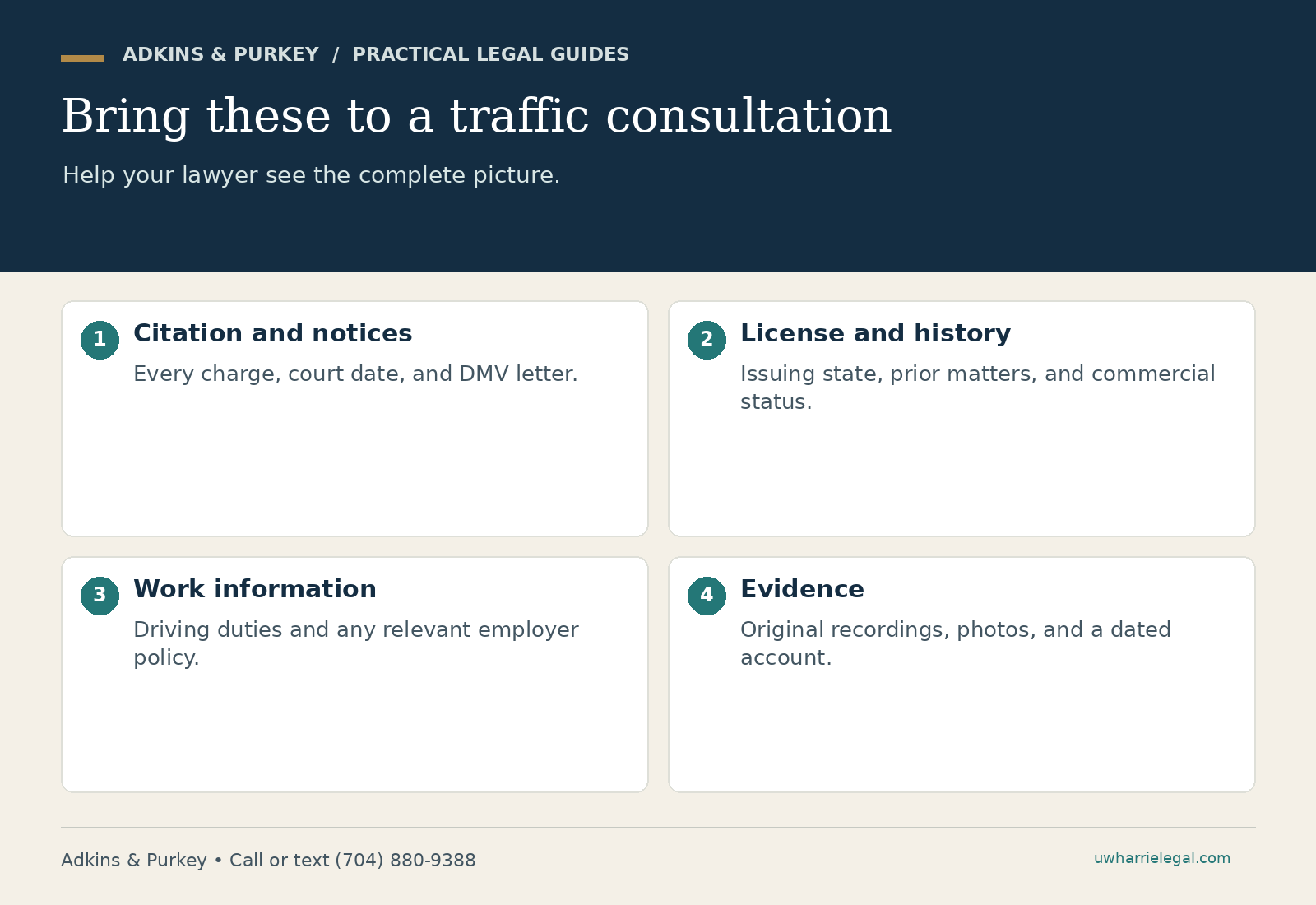
Bring the citation, court notices, driver’s license information, any DMV correspondence, available driving history, and the details of how you use a vehicle for work. Our Locust office can help you identify the questions that need answers before you choose a disposition. The objective is an informed decision grounded in the charge and your circumstances, without promises about results.
Attorney advertising. General North Carolina legal information as of September 22, 2026; not legal advice for a particular matter. Laws and procedures can change. Reading this article or contacting the firm does not establish an attorney-client relationship. Please do not send confidential information through an initial inquiry.


Leave a comment