
Civil Litigation · Locust & Stanly County, North Carolina
In this guide- Read the original agreement first
- Describe the change so a stranger can understand it
- Confirm that the signer has authority
- Electronic records can matter, but context still matters
- Some transactions have special writing requirements
- Avoid an accidental release or replacement
- If the work already changed
- Practical help for local businesses and individuals
A project begins with a signed agreement. Then the scope expands, the delivery date moves, or the parties discuss a different price by text. Months later, each side remembers the conversation differently. For businesses and property owners in Locust, Albemarle, and Stanly County, the dispute may turn on a simple question: what terms actually changed, and what proves the change?
A well-prepared amendment or change order creates a reliable record before additional work or payment expectations become a source of conflict. It should fit the original agreement and the type of transaction. Copying a generic form without reading the existing contract can create new inconsistencies.
Read the original agreement first
Locate the complete signed contract, including exhibits, schedules, incorporated terms, and earlier amendments. Look for provisions governing modifications, notice, approval authority, payment, deadlines, termination, and dispute resolution. A proposal may require approval by a particular person or through a particular process.
Check which document controls if terms conflict. A later email may address a narrow issue while leaving the rest of the agreement intact. A new purchase order may introduce additional language. The answer is not always that the newest piece of paper automatically replaces everything before it.
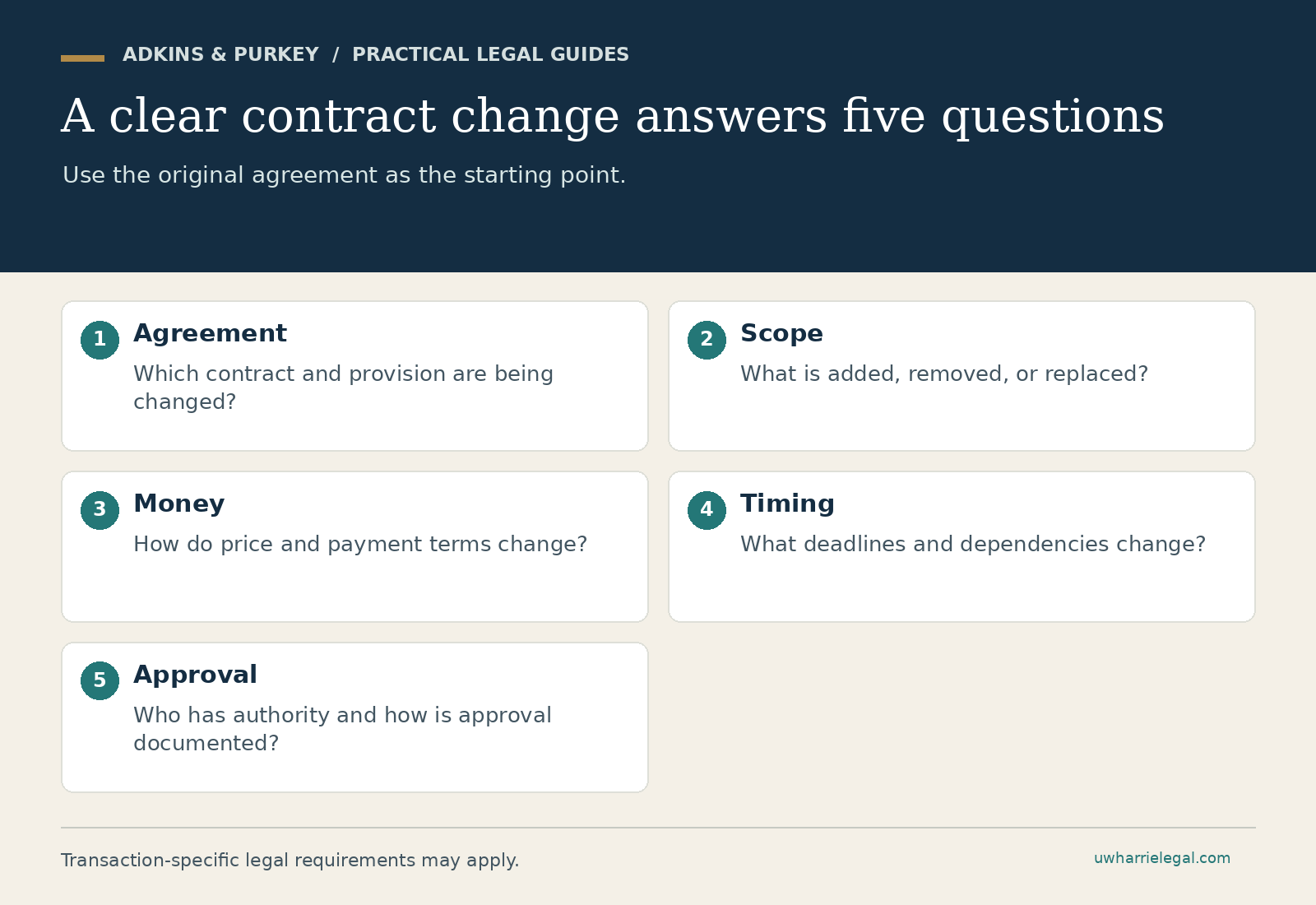
Describe the change so a stranger can understand it
Identify the original agreement and the exact provision being changed. State the old requirement if needed for clarity, then the new one. For added work, define what is included and what remains excluded. For a price change, explain the amount, method of calculation, payment timing, and any conditions.
Dates deserve equal care. Distinguish a firm deadline from an estimate, identify dependencies, and explain whether other milestones move. If an owner must select materials before work can proceed, say when the selection is due and how delay will be handled.
| Change | Questions to answer in writing |
|---|---|
| Scope | What work, product, or service is added, removed, or replaced? |
| Price | What amount changes, when is it due, and how is it calculated? |
| Timing | Which deadlines move and what assumptions support the new dates? |
| Responsibility | Who approves, performs, supplies information, and accepts completion? |
Confirm that the signer has authority
A friendly conversation with someone at a company does not always establish that the person can change the company’s contract. Identify the contracting parties precisely and confirm the appropriate signers. A trade name, individual, corporation, and limited liability company are not interchangeable labels.
For a business agreement, preserve the person’s title and the context of the approval. If several parties signed the original contract, ask which must consent to the amendment. Do not assume a subcontractor or project employee can waive a term imposed by another party.
Electronic records can matter, but context still matters
North Carolina recognizes electronic records and signatures under its Uniform Electronic Transactions Act. A record or signature cannot be denied legal effect solely because it is electronic, subject to the Act’s requirements and scope. That does not make every informal text message a complete, enforceable amendment. Agreement, attribution, authority, and the transaction’s requirements still need analysis. See § 66-317.
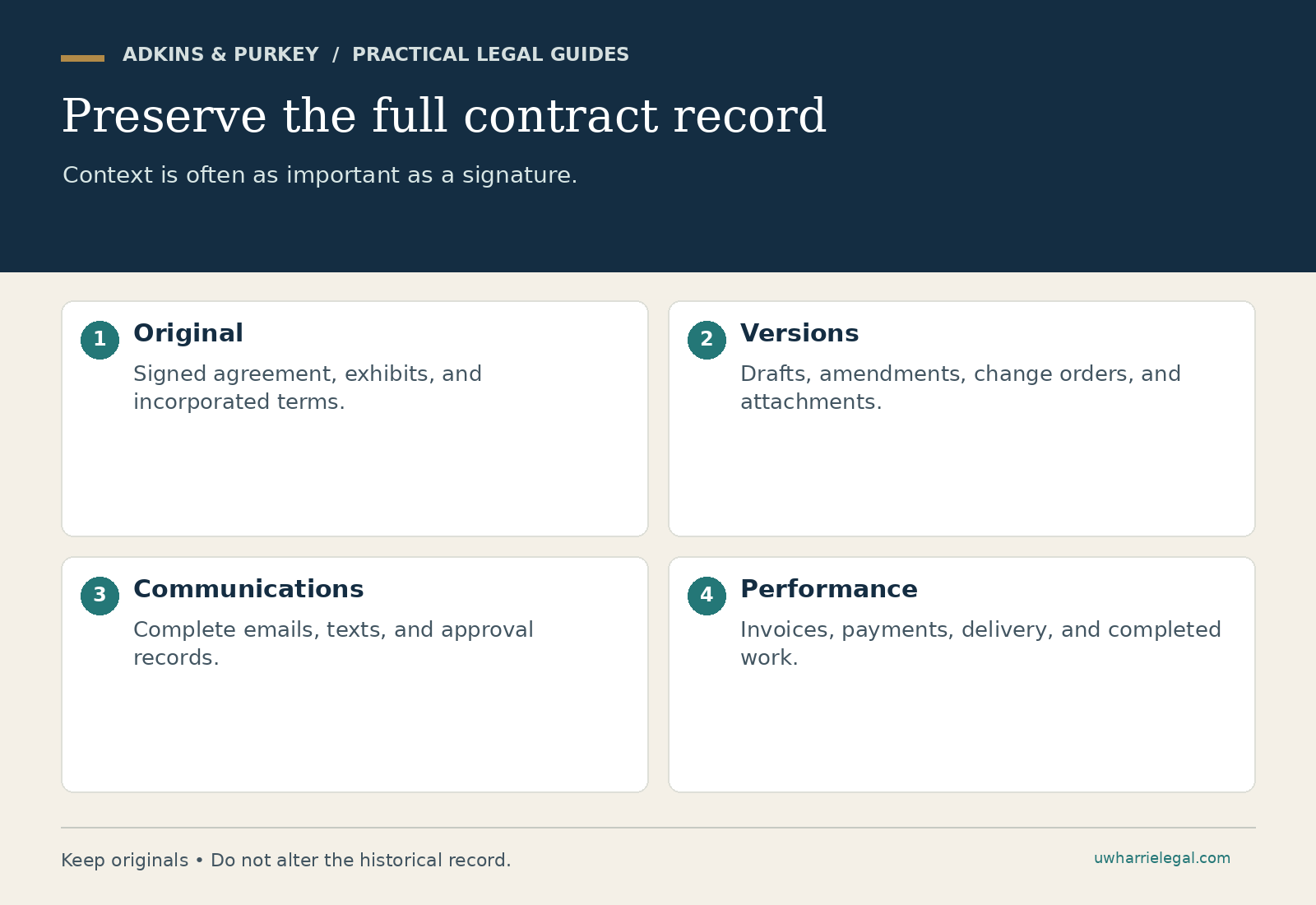
Keep complete email chains, attachments, version histories, and signature records. A cropped screenshot may omit the condition that changes the meaning of “approved.” Preserve original files and identify who sent and received each version.
Some transactions have special writing requirements
Contracts involving land and certain leases are subject to the writing and signature requirements of § 22-2. Sales of goods, guarantees, consumer transactions, and other agreements can raise different statutory rules. Whether new consideration is required can also depend on the applicable law and transaction.
Those distinctions are a reason to review the actual deal before relying on an oral change. An amendment to a real-estate purchase agreement should not be treated as though it were the same as a routine scheduling adjustment between service providers.
Avoid an accidental release or replacement
Read language about releases, waivers, settlement, and superseding agreements carefully. A document intended to extend a deadline may also contain a broad release. A new agreement may unintentionally replace protections you expected to keep. Ask which original terms remain in force and whether any existing claims are being resolved.
If the change is prompted by a dispute, document the business solution without making unsupported accusations or admissions. Settlement language can have consequences beyond the immediate invoice. Counsel should evaluate the risk before the parties sign.
If the work already changed
Collect the original contract, every proposed revision, messages, invoices, payment records, delivery records, and evidence of performance. Create a timeline showing what each side requested, approved, and did. Separate agreed facts from disputed ones.
Do not rewrite old records to make them match your recollection. A current written confirmation can be useful, but it should accurately state when it was created and what remains disputed. If a claim or lawsuit is possible, review deadlines promptly; negotiations do not necessarily pause them.
Practical help for local businesses and individuals
Adkins & Purkey can review proposed amendments and evaluate disputes involving changed terms. Bring the complete agreement and a concise description of the business outcome you want. If a separate traffic or DWI issue affects business travel or work, the firm’s LKN DWI Defense site provides additional resources.
Attorney advertising. General North Carolina legal information as of September 22, 2026; not legal advice for a particular matter. Laws and procedures can change. Reading this article or contacting the firm does not establish an attorney-client relationship. Please do not send confidential information through an initial inquiry.


Leave a comment